Women's Wallet Bulk Order: 6 Interior Layouts and Who Buys Which
Most wallet orders fail on the inside. A buyer approves a leather swatch, a colour and a logo, then receives 1,000 pieces where the card slots grip too tight to pull a card out, or the coin pocket zip sits where the bill fold should be. The interior is decided by how the wearer uses the wallet, and it is the cheapest thing to get wrong and the most expensive thing to correct after cutting. Here are the interiors that cover almost every women's wallet brief, what each one holds, and which buyer asks for it.
Six Interiors, Six Different Buyers
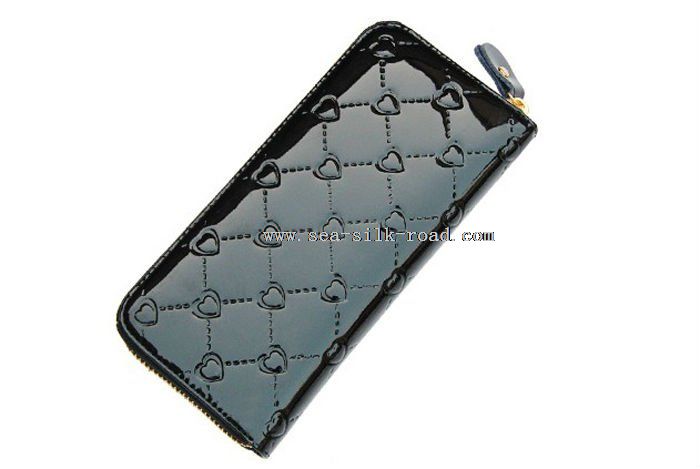
The bifold is the default for department store and supermarket programs: two bill compartments, six card slots, an ID window, folded leather. The zip-around is the security format: the whole wallet closes with a zip, twelve card slots in two banks, a gusseted coin pocket in the middle. European and Japanese retail programs ask for it more often than US ones, because the coin pocket replaces a separate purse.
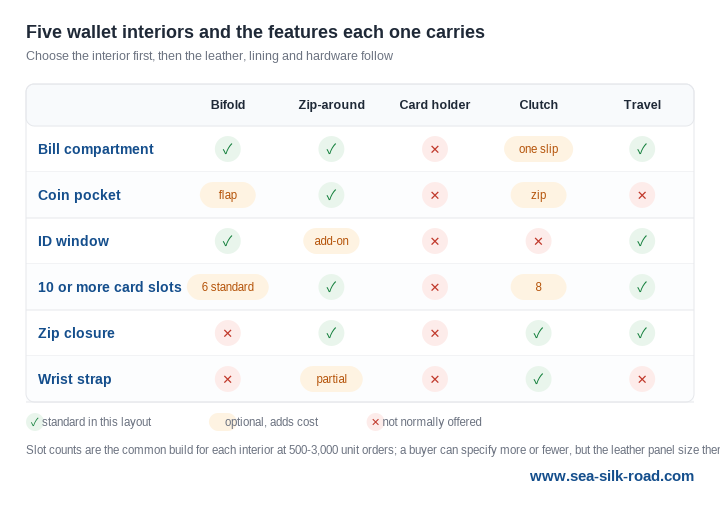
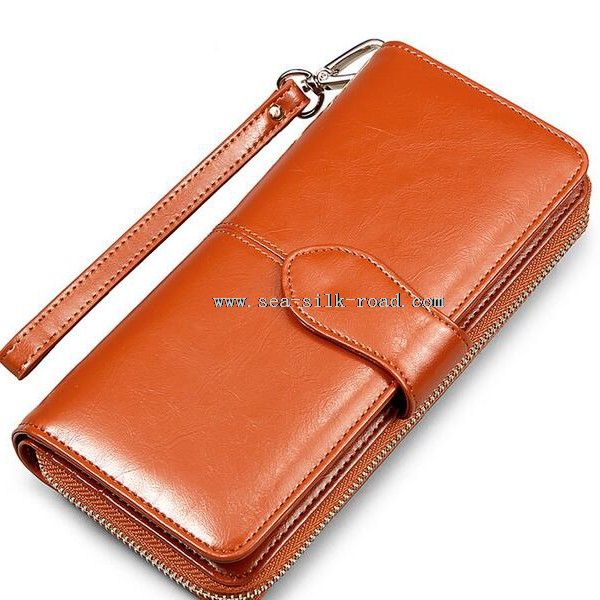
The card holder is the promotional format. Four slots, one centre pocket, no bill fold, often no lining. It costs the least per unit, prints the largest logo per square centimetre, and suits a giveaway where the recipient already owns a wallet. The clutch wallet is the gift-with-purchase format: eight slots, a wrist strap, a zip compartment for a phone, finished like a small bag because it is meant to be carried alone. The travel wallet is the duty-free and airline format, with a passport sleeve, a boarding pass slip and a pocket that takes notes in two currencies.
Card Slot Count Decides the Panel Pattern and the Price
Card slots are not free space. Each slot is a strip of leather or lining stitched to the panel, and every two slots add a layer. Six slots on a bifold means three rows of two; twelve on a zip-around means two banks of six, which forces a wider panel and a longer zip. When a buyer asks for twelve slots on a bifold body, the pattern has to grow, and the unit cost moves with the leather area, not with the labour.
Slots also decide whether cards come out. A slot cut to the card width with no ease grips the card and tears the top edge of the slot within months; a slot 2 mm wider releases cleanly and looks slightly loose when empty. Ask for a sample loaded with ten cards and pulled twenty times per slot, then look at the slot mouth for stretching and at the stitching for pulls. That one test replaces a paragraph of specification argument.
Depth matters as much as count. Cards sit at roughly 0.76 mm each, so ten cards plus a bill fold is about 8 mm of contents before the leather. A wallet built with a 6 mm gusset will not close flat once loaded, and the snap or zip takes the strain instead. Specify the loaded thickness, not the empty one.
Coin Pockets, ID Windows and the Market Habits Behind Them
Coin handling separates markets more sharply than any other feature. Where coins are still part of daily payment, a wallet without a coin pocket is a wallet the buyer will not reorder; where card payment dominates, a coin pocket reads as bulk and the slim card holder wins. The practical answer is a zip coin pocket on the inside back panel for markets that need coins, and a slip pocket for the rest, because a slip pocket costs less and adds no hardware.
ID windows follow the same logic. A clear window on the inner flap lets a driver licence or staff badge show without being removed, which is why store programs and corporate badge wallets ask for it. The window is clear PVC or TPU heat-sealed into a leather frame; the seal is the weak point, and a cheap seal clouds or lifts at the corners within a season. Ask which material and which sealing method, then flex the window corner fifty times on the sample.
Lining, Zipper and Edge Paint: Where Cheap Interiors Show
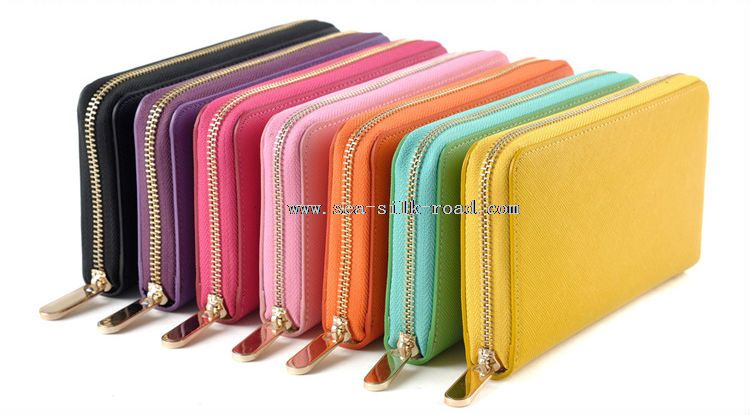
The lining is the part buyers skip and returns expose. A cotton twill lining at 120 to 150 gsm holds shape and resists pilling; a thin polyester taffeta slides against itself, so cards migrate and the slot mouth creases. If the quote does not name the lining, ask for the weight and a swatch, then fold the swatch in half and press it for a minute to see whether it holds a crease.
Zips are the second tell. A nylon coil zip with a metal slider is the normal build for a zip-around; a moulded plastic zip saves cost and fails at the curve, where a wallet zip spends its whole life. Run the zip twenty times around the curve on the sample and watch the tape for rucking. Edge paint is the third: two thin coats that stay flexible beat one thick coat that cracks at the fold. Bend a painted edge 180 degrees and look for a white line.
Sampling and Ordering: What to Lock Before the Deposit
Approve the interior as a drawing before the sample, and as a loaded sample before the deposit. The drawing should state slot count, coin pocket type, ID window position, lining material and weight, zip type, and the loaded thickness the wallet must close at. Suppliers quote from that sheet far more accurately than from a photo of a competitor wallet,.
Then test the loaded sample: ten cards in and out twenty times, coins in the pocket, a fold test on the bill compartment, a zip run around the curve, and a check that the wallet closes flat with contents inside. Photograph every interior view with a rule in frame; those become the pre-shipment reference.
Send the interior you need, the market it ships to and the quantity per SKU, and we will quote the pattern, lining and zip as specified. Browse the women wallets range for the bodies these interiors are built into, then request a sample with your slot count and coin pocket choice locked in.
Planning a promotional gift order?
Send your spec and target quantity for a quote and a digital proof.
Get a free quote