Sprayed vs Electroplated Candle Holders: A Wear Test
Sprayed and electroplated candle holders can look identical on a shelf and behave nothing alike after a season of shipping, handling and cleaning. If you are choosing a finish for a bulk order, the decision comes down to which failure mode you can tolerate: spray coatings chip and rub, plating can haze or flake if the substrate and pre-treatment are wrong. Test those two paths before you commit a container, not after.
What the two finishes actually are
Spray painting lays a pigmented coating on the surface and cures it, so the colour sits in a layer above the glass or metal. Electroplating deposits a thin metal layer by chemical or electrolytic means; on glass it is usually a vacuum metallising or silvering process, on metal a plated nickel or chrome. The practical difference for a buyer is thickness and bonding: a spray film is comparatively thick and can be scratched through, while a plated layer is thin and fails by peeling or hazing when adhesion is poor.
Neither finish is inherently better. Spray gives you almost any Pantone and can cover flaws in the base piece; plating gives a reflective, glass-like surface that reads as premium. Choose by the look you need and the abuse the holder will take in shipping and daily use.
Three wear tests that separate them
Put both samples through the same three checks and score them side by side. First, a cross-hatch adhesion test: cut a small grid in the finish with a blade, press tape over it and pull. Spray on glass often lifts at the cut edges if the surface was not cleaned or primed; a well-plated layer usually holds. Second, an alcohol rub: wipe the surface with a cloth soaked in 70% isopropyl alcohol for a set number of strokes and check for colour transfer. Third, neutral salt spray in a cabinet for a fixed number of hours, which exposes poor plating far faster than a kitchen sink ever will.
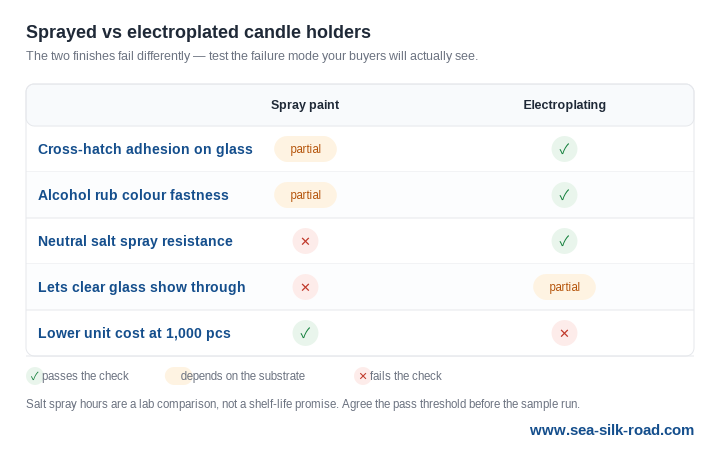
Agree the pass criteria in writing before the sample run. "No visible loss after 50 alcohol strokes" is a testable line; "good quality finish" is not. Ask the supplier which test they run in-house and request the actual result, not a verbal assurance. Salt-spray hours are a lab comparison between two samples, not a promise about how long a holder will last in a customer's home.
Cost, MOQ and what the finish adds to a quote
Expect a plated finish to carry a higher per-unit cost and, often, a higher minimum order than a sprayed one. Plating lines are set up for a batch and the supplier must recover the setup and the reject risk; spray is easier to run in smaller quantities and easier to touch up. Ask for a price break at 500, 1,000 and 3,000 pieces for both finishes so you can see where the gap narrows. In many programmes the plating premium shrinks at volume, but only the supplier's own quote will confirm it for your holder and substrate.
Lead time is the other line to check. A plated sample often needs an extra round to get the surface preparation right, so build a revision into your sampling calendar rather than assuming one sample is final. If you have a fixed ship date, start the plated option earlier or accept the spray finish for the first run. Never let a finish decision push you into approving goods you have not wear-tested; a delayed launch costs less than a container of holders whose plating flakes in transit.
How the substrate changes the answer
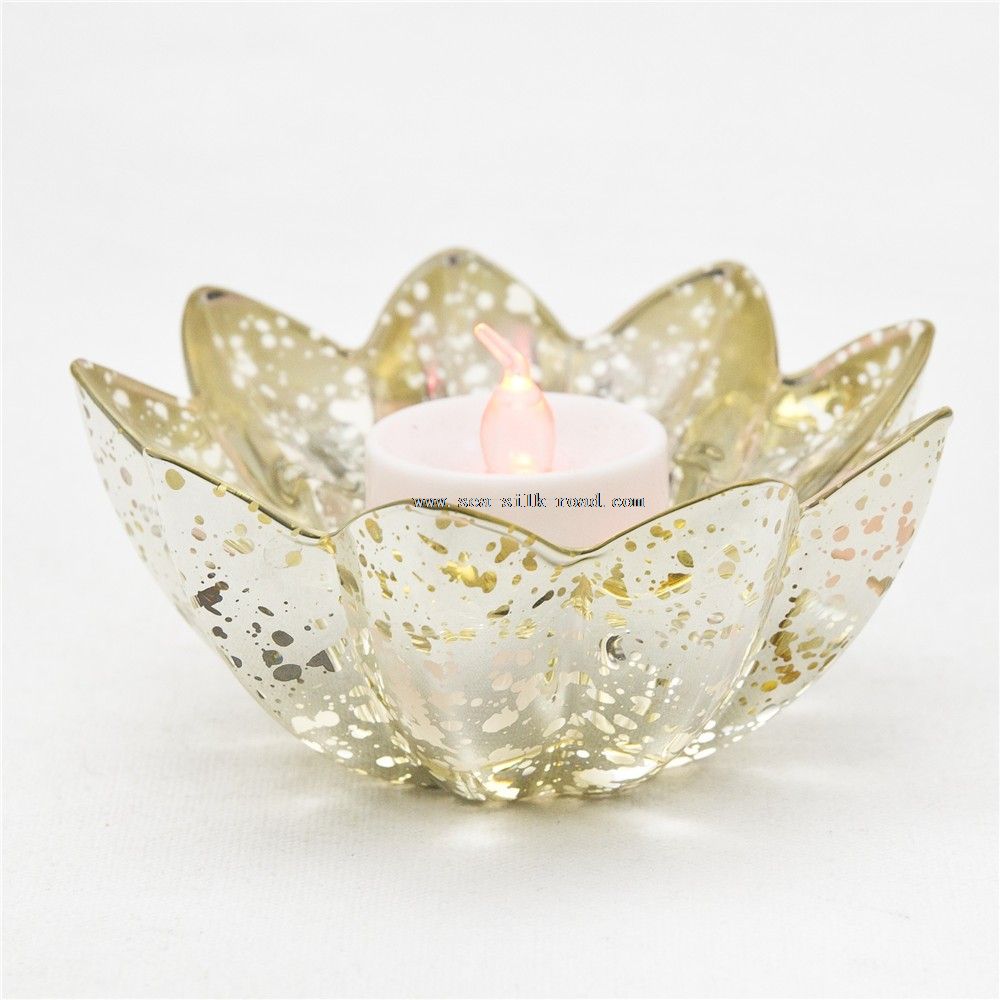
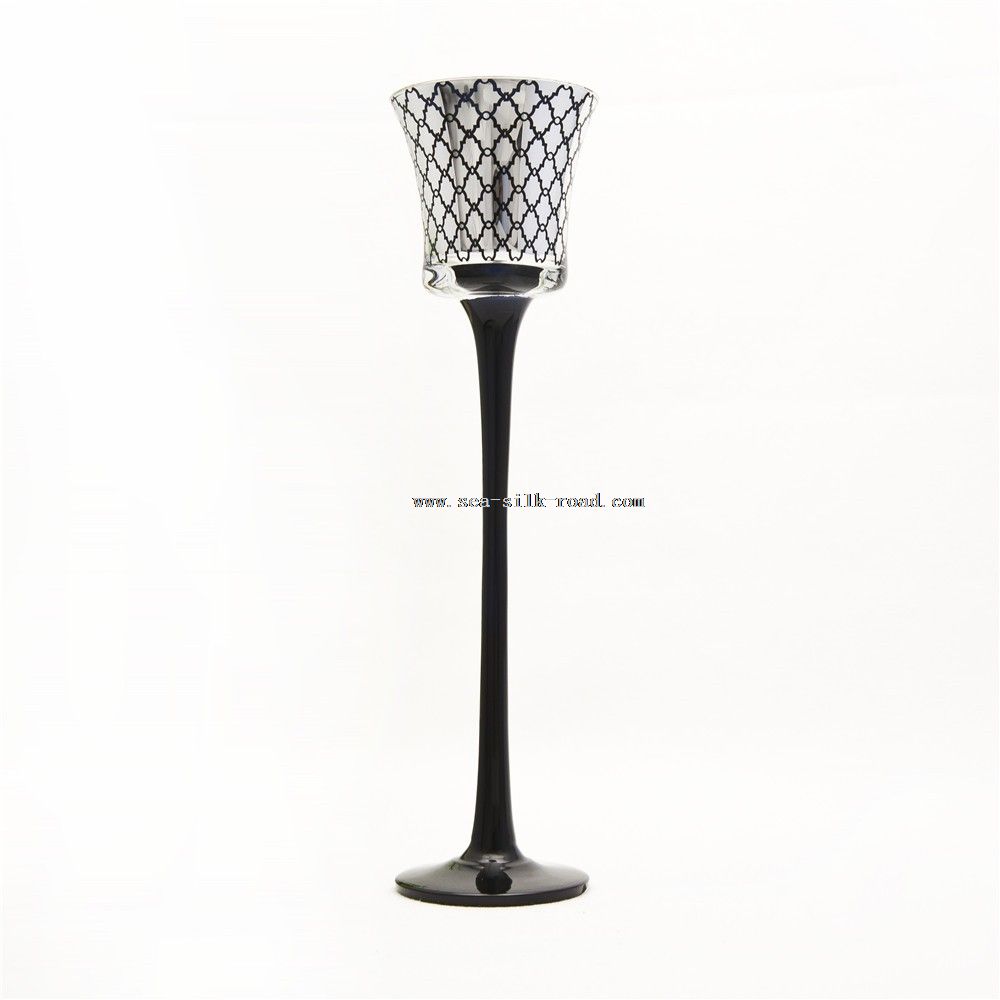
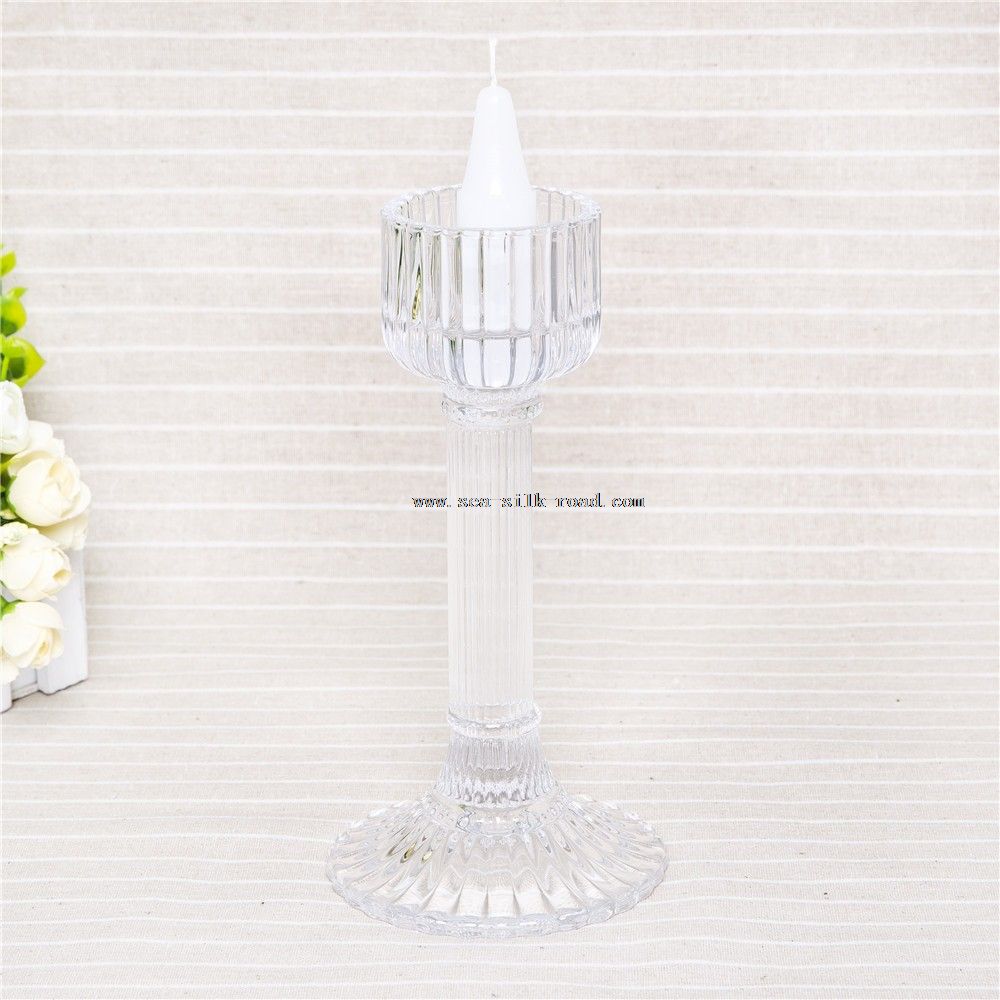
Glass, ceramic and metal do not take a finish the same way. On clear glass, spray paint hides the transparency, whereas electroplating or silvering keeps a mirror effect but demands a perfectly clean surface. On metal, plating is the natural choice and generally more durable; on porous ceramic, spray is easier to apply evenly. Ask what pre-treatment the factory uses — cleaning, priming, sandblasting — because most finish failures trace back to that step, not to the paint or the plating bath itself.
What to put on the spec sheet
Write the finish into the purchase order as a process plus a test, not a colour name. State the substrate, the finish method, the target colour or effect, and the pass threshold for adhesion and rub tests. Add a clause that a finish change requires a re-approved sample — otherwise a supplier may quietly switch from plating to spray to hit a price point, and your wear test no longer applies to the goods shipped.
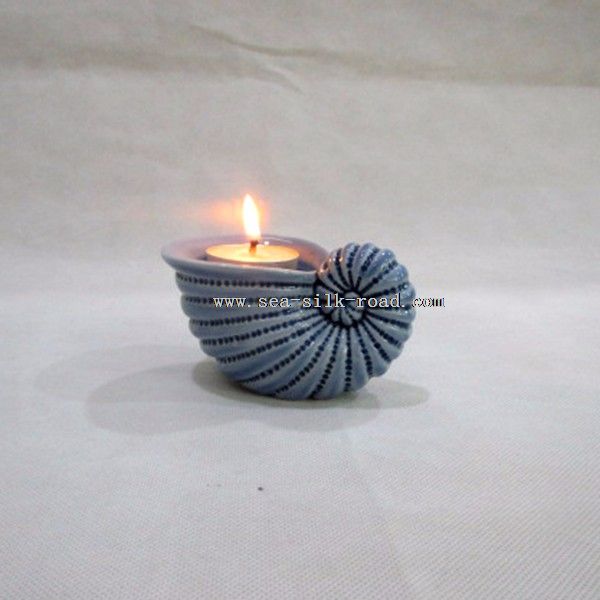
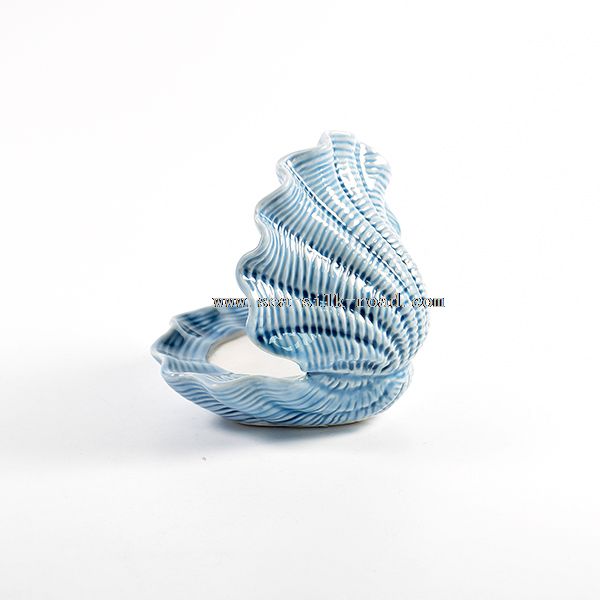
For a full range of finished holders, review our glass and ceramic candle holder range, then request a free sample and quote with your substrate and target finish. We will send both spray and plated samples so you can run the same three tests on your side.
Planning a promotional gift order?
Send your spec and target quantity for a quote and a digital proof.
Get a free quote